The Social Pipeline Problem
For tens of thousands of years, all social interaction was in person. Now it's mostly online. Let's see how this goes...
For tens of thousands of years, all social interaction was in person. Interactions in person facilitated friendships, job acquisitions, and relationships. Then, in the 2010s, we decided we should do it all on social media and on the internet. That evolutionary experiment is failing.
We have a social pipeline problem, meaning the standard pathways for us socially, in the workforce, and in dating, have collapsed. We’ve played the cruelest and most evil trick on all of humanity through the Internet, social media, dating apps, and online job boards. We’ve told them that instant availability and quantity beat quality and in-person social connection. They don’t.
Each of these online things, dating apps, online job boards, and social media, functions as a pipeline for interaction. They sort out who should interact with who, and where everyone should be within society. They function as centralized social selectors Every one is categorically worse at filtering out the bad from the good. It’s a major downgrade to our prior social pipeline system, decentralized in-person selectors, that made making friends, getting jobs, and getting laid easier.
When water flows from one place to another, it typically flows from a water treatment facility through a series of pipes to a house, or maybe a restaurant. There are hundreds of thousands of pipes going through the average city. They’re typically filtered a decent bit to make the water drinkable. Miraculously, they deliver the right amount to the right places all the time, despite being so complex.
This is how society works.
All of the small pipes are the many social contexts. The multiple filters that water goes through are much like the social filters one must go through in person, body language, tone, social proof, etc. And the pipes are fixable in the location they broke at, without messing up the whole system.
There are millions of interactions everyday in the average city, and, typically, it all goes smoothly. How? Every person typically chooses to interact with the people they want to interact with. They make specific choices targeting specific outcomes. They know what to expect from these interactions. This gives them predictability and makes the emotion produced by them mostly positive.1 These interactions are typically in person, but younger generations have been interacting in person less. Many of these interactions have moved to the internet. Or just disappeared.
It’s like we took our water system, with its millions of individual pipes, and centralized the water flow to a single massive pipe in the middle of the city. We said that the massive water flow would be better, but it turns out that people can’t get water from a pipe flowing like the average water slide at an amusement park. You need access to special equipment, and the only people who really get the water they need are the ones that request it be delivered another way. All the while, this new water that the younger generations are drinking isn’t like the old water. It pretends to nourish you while being addictive and mostly useless.
Think of it this way, applying for jobs online or swiping on Hinge is equivalent to drinking water from a firehose. Now imagine the HR managers going through 242 applications for each job (last year’s numbers) or girls on Hinge going through 500 boyfriend applications. Same thing. Firehose. That’s useless and anxiety producing. Why not just hire and date only in-person?
This is the fundamental problem.
For better or for worse, humanity is structured so that relationships typically form through other mutual relationships in-person. Let’s look at some statistics and our history to paint a picture on this process, and how we’ve decided to change it in the most idiotic way possible.
If we go back to 1820, the corporation was hardly even a mental category for the average person. Today, a drive down an American road takes you past McDonald’s, Exxon, and Walmart, all multinational corporations. The average horse ride down an American dirt road in 1820 was more like Bob’s Saloon, Jim’s Barber, and a bunch of locally owned farms. Everybody knew each other. For most of history, jobs weren’t something you applied for online; work was largely determined by your family, community, and the circumstances of your birth.
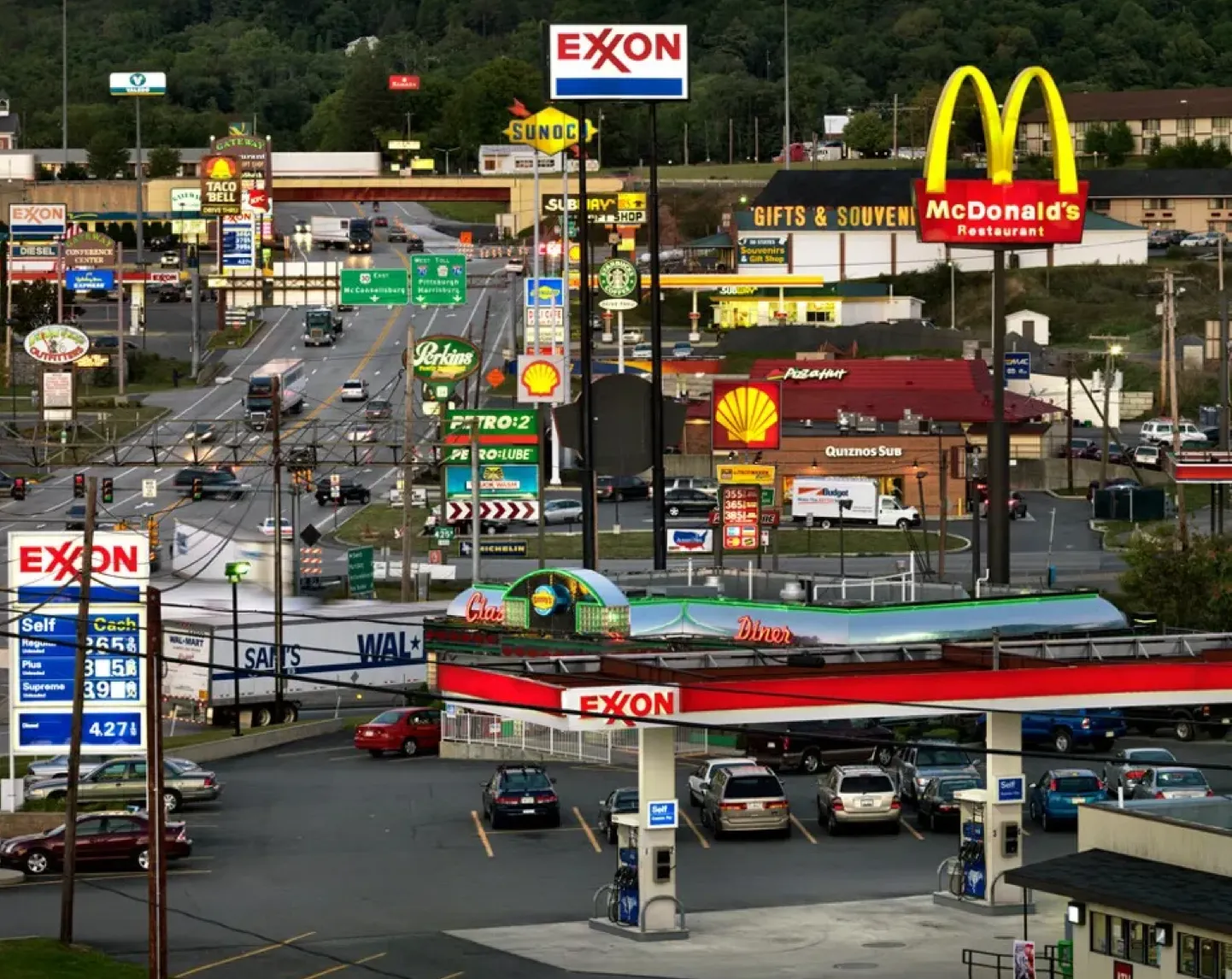
The explosion of corporations and big business changed this. Economic life became increasingly centralized, and eventually we applied the same logic to social selection. Instead of jobs, friends, and romantic partners emerging primarily through thousands of local networks, we built centralized services to select them for us.
Humanity shifted from decentralized social selection to centralized social selection. We went from thousands of small pipes spread across the city to one massive pipe in the middle. The problem is that these internet social selectors are worse at filtering than the in-person systems they replaced—and nearly everyone has started using them anyway.

The Job Boards (Ziprecruiter And Indeed)
The shift in the average person’s job search even over the past 20 years has been massive. Nearly 80% of job searchers in 2015 were searching for jobs on the internet, according to Pew Research. Compare this to 2001, when only 11% of unemployed job seekers were looking for jobs in the Internet. You might ask, okay, but why is this a problem? Aren’t they just widening their range of potential jobs?
Consider that 45% of all job listings are fake. Yes. Seriously. That’s according to Forbes. You wasted your time. Doesn’t that make you mad? Either it’s a scam and they harvest your data (again, seriously), or it’s a government job filled by networking that HR requires them to post online, or its a company trying to make it seem like they’re a booming business. How messed up is that? That’s not just a broken pipeline. It’s one labeled “water” that delivers shit to your showerhead.
Let’s go back to one of those points, it’s a job filled by networking that is required to be posted online. A general truism of applying for jobs online is that if you don’t know someone there, it’s over for you. In fact, most jobs are still filled through networks. Some experts suggest that 50-80% of jobs are never posted and are filled through networks. If you apply online, you’re basically throwing a paper plane off the top of the Empire State Building and hoping it lands in Jersey. Maybe if you throw it 242 times, you’ll make it.
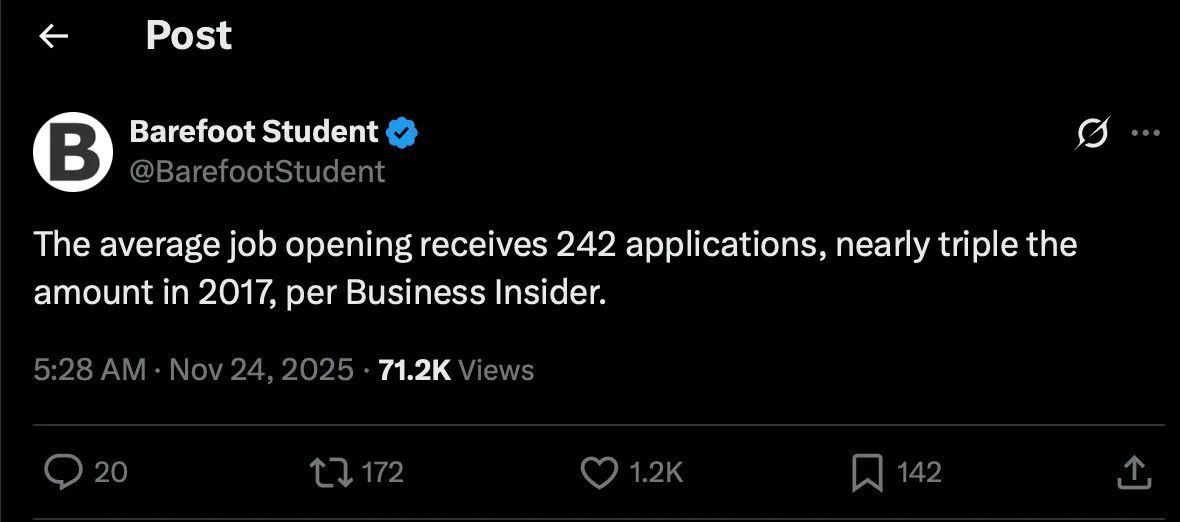
You need between 50-200 job applications online to get a job. One study showed that people who were referred through a network were 10x more likely to get the job then those who applied online. You can walk into probably ten jobs in person and land a job.2 And what does 200 rejections tell your brain? You suck. You’re a loser. This had led to massive resentment among the younger generations. You can taste the anger on Twitter and Instagram.
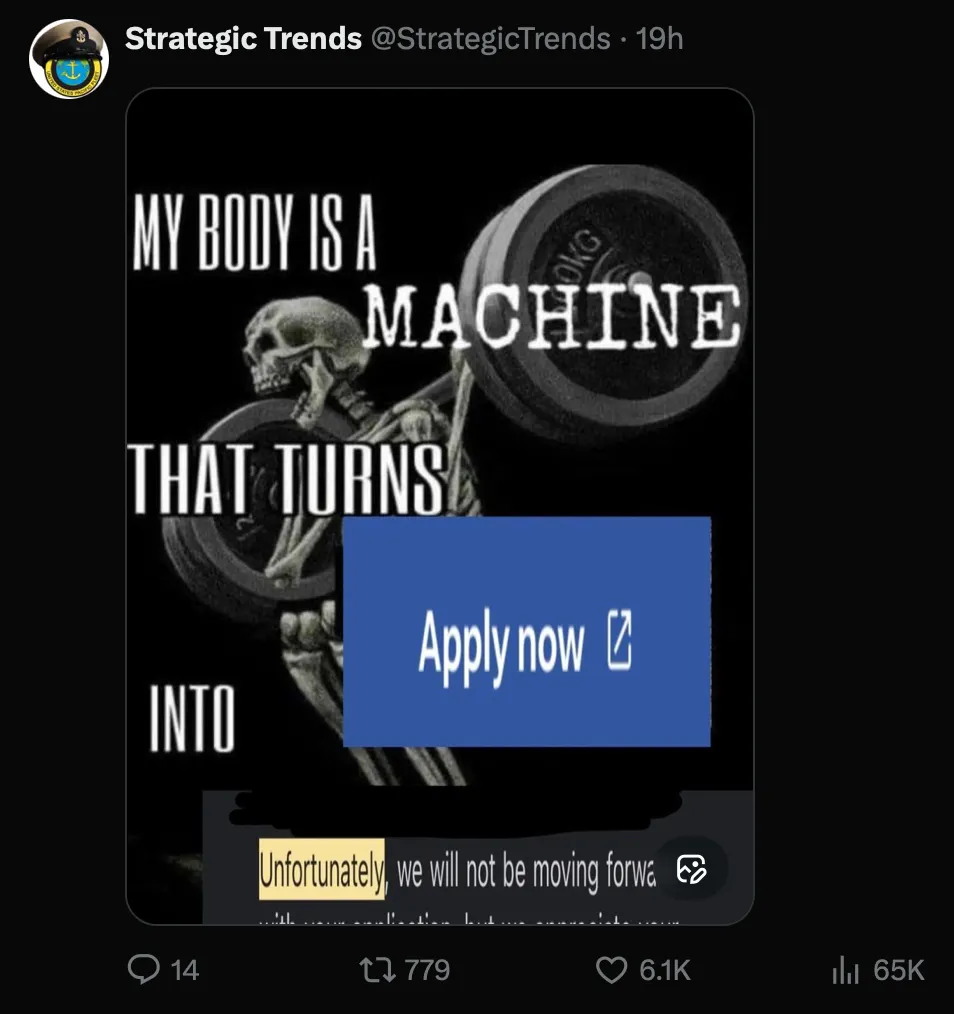
Online job sites are a horrible solution to a problem that was already solved. We replaced a perfectly functioning pipeline with a broken one. One that works 10x worse. We also replaced in-person social interaction with online interaction, and that’s had perhaps the worse effect.
Social Media And The Lonely Generations (Gen Z And Millennials)
Most people you know have 3-5 social media apps. Twitter, Instagram, TikTok, Facebook, YouTube, Snapchat, blah blah. Among Gen Z, usage of these apps is sky-high. Some reports some teens spending up to 7 hours a day on these apps, and that doesn’t include computer usage at school and Netflix after. The whole day is spent glued to a screen. Noticeably after not GOING OUTSIDE, Gen Z has way less friends than prior generations.
Here are some crazy statistics. Three out of ten millennials reported often feeling lonely in 2019, and are much more likely to say that they have no friends than older generations. One in four adults between 20-24 reported having one or no close friends in 2023. At work, 21% of Gen Z employees say they have no friends there at all. American in 2021 averaged 2 close friends, down from 5 in 1990. These are the generations most absorbed by social media.
Doesn’t seem like their relationship outcomes are improving. In fact, more frequent and longer social media use is significantly associated with higher levels of loneliness. I thought it was supposed to make you less lonely and “connect” you to old high school friends? Turns out you stop messaging them in Freshman year and get caught up on the newest rage-inducing post in your feed.
It’s no secret that social media produces outrage, and often prioritizes rage-slop and political nonsense, but consider this: your emotions and perception are created by your experience of the world. If six hours of your day is spent looking at anti-social political nonsense or utter brainrot AI videos, how will your perception change? Think about this: how many friends have you made through in-person interactions versus social media interactions? It calls itself “social media” while producing deeply anti-social outcomes. Maybe we should call it anti-social media.
The Dating Apps And The Gender Wars
Speaking of anti-social, let’s talk about dating apps. These have failed for the same reasons that social media and job boards have failed, it’s all noise and no signal. For most of civilization’s history, who you dated or married depended on your social environment. This is still how it works for many people, but some have ventured off into dating apps and quickly discovered that quantity is NOT quality.
When you date in-person, your compatibility is mostly preselected. You meet people at places that you like to go, meaning if they’re also there, they probably also like to go there. You meet them at your favorite bar, which they also like. You meet them in engineering class, they also want to be an engineer. You meet them at run club, you’re also into fitness. See how this works? The activity pre-selects your compatibility. The activity functions as a small filter for a local water pipe. Apps do a terrible job of this.
Apps hook people up mostly on the basis of looks, and oftentimes dating apps privilege the most psychopathic men due to their lack of a social filter. What do I mean by that? If John decided to hook up with a bunch of women in his social circle and leave them, other people would start to notice and probably police his behavior. This does not happen on the apps, and thus we get the proliferation of hardcore feminists saying they hate all men. Then you get viral TikTok videos about how a bad man treated a woman, and since it goes mega viral, it’s as if that happened a million times. Then women mistrust men. Then red pillers get more video proof that women hate all men. It’s a death spiral for gender dynamics and social trust. It’s a broken pipeline.
In every single case, the in-person option works better. You get more jobs through in-person networks. You make more friends through parties, bars, and other in-person events. You get more relationships through in-person social connections. Why should we keep using the internet for these things at all?
We traded our complex networks of small pipes delivering water to our house. for one delivering a flood of water in the middle of the city that delivers low quality water. Most of it is flat out undrinkable. Its drinkability is often totally unpredictable, and because of it the younger generations are malnourished. They’re somehow thirsty in what should be an oasis. Shockingly, Gen Z is the most anxious generation in history, thirsting for connection. The social pipelines aren’t working for them, and all they need to do to rebuild them is to step outside.
If you want to explore more on this topic, I recommend reading Richard Lazarus’ Emotion and Adaptation and Jordan Peterson’s Maps of Meaning. The appraisal theory of emotion is probably about 70% right, though the mechanism of the appraisal has been questioned by neuroscientists like Joseph Ledoux. In summation, Emotions are often mediated by predictability, meaning that less predictability means more negative emotion and more predictability means more positive emotion. You get angry when someone unexpectedly does something that derails your current goal. You get happy when someone helps you achieve it.
Could not find data on this, but I can tell you that I and a lot of people I know have tried this method and usually have a 20% or better hit rate. That’s a little better than 242 applications, right? Try 5.